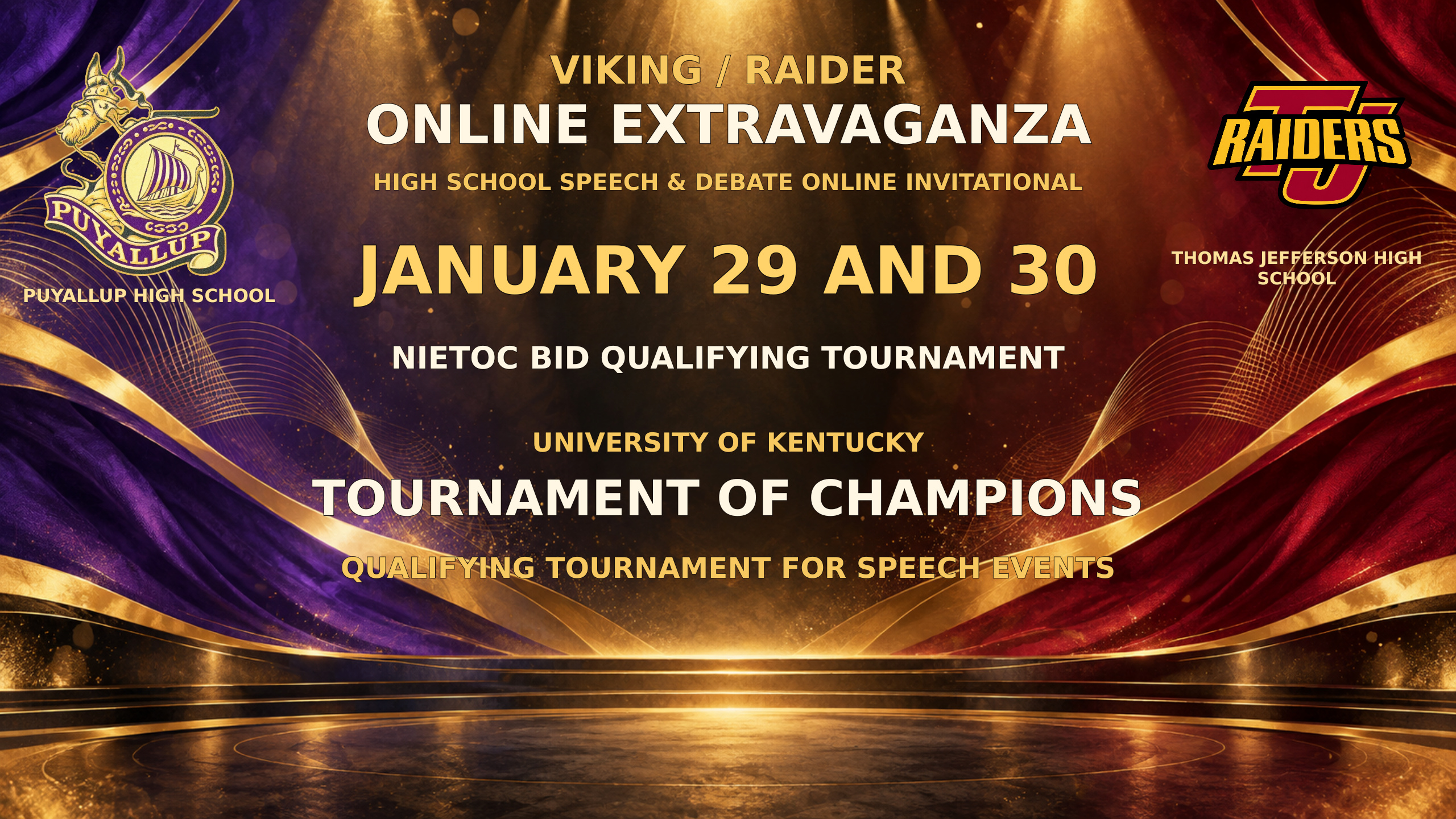
Viking Raider Extravaganza PuyallupThomas Jefferson Speech and
2027 — NSDA Campus, WA/US
Open SPAR
Event Description:
SPAR:
Each spar panel consists of approximately eight competitors. The debaters will be assigned affirmative or negative until all debaters are assigned to a side by the judge prior to the start of the round. Each pair will consider a single issue/resolution which is distributed in round through the chat feature by the judge – STUDENTS MUST BE ABLE TO ACCESS THE CHAT!!!!! Speakers will have two (2) minute before speaking must commence. The first affirmative speaker will give a (2) two-minute speech in favor of the resolution; immediately after that speech, the first negative speaker will refute the position in a (2) two-minute constructive. There will be a THREE minute open cross-examination period where the two debaters can offer and ask each other questions. They may also call on audience members who have their hands raised for questions. Then the Affirmative side will get a ONE minute closing followed by the Negative presenting a ONE minute closing. The judge will rank all the debaters in the round against each other (ie. the loser of the first debate can still take second in the round because they could have been better than the rest of the debaters). Humor is NOT penalized in this form of debate. Unique resolution analysis is also not penalized, as long as the debaters can offer arguments.
If an odd number of students show up for the round, one student may give a repeat (unscored) additionalperformance. Answers by debaters to questions from the audience during the open CX period should beused in the scoring of the competitors who are actually debating, but should not be considered as relevant inthe scoring of those who are merely asking questions, particularly since some students may be double-entered and will not have the opportunity to participate in the questioning process.
We are all influenced by implicit bias, or the stereotypes that unconsciously affect our decisions. When judging, our implicit biases negatively impact students who are traditionally marginalized and disenfranchised. Before writing comments or making a decision, please take a moment to reflect on any biases that may impact your decision making process.
Please remember that the video quality of a student’s performance or speech may be impacted by lighting, internet, access to equipment, and other family members’ presence in the home. To ensure a more equitable experience for our participants, please be sure your decision-making process and comments are related only to the content and quality of the presentation or speech itself.
Locations
Puyallup High SchoolContacts
Sarah SherryGeneral
Invitation Home Email Archive Events & Divisions Institutions In AttendanceEvents
Open Congress Junior LD Junior Public Forum Open LD Open Public Forum Open Dramatic Interp Open Duo Interp Open EdComm Open Extemporaneous Open Humorous Interp Open Impromptu Open Informative Open Oratory Open Programmed Oral Interp Open SPAR Open Spoken World Poetry World Schools DebateCircuits
NatCir – National Circuit (US HS) TOC-UK – Tournament of Champions WAS – Washington State WSDC – Worlds Schools Past Years' EditionsDates & Deadlines
PDTThese deadlines are set in Tabroom for technical purposes. Always consult the invitation or tournament notices for official policies about deadlines and procedures.