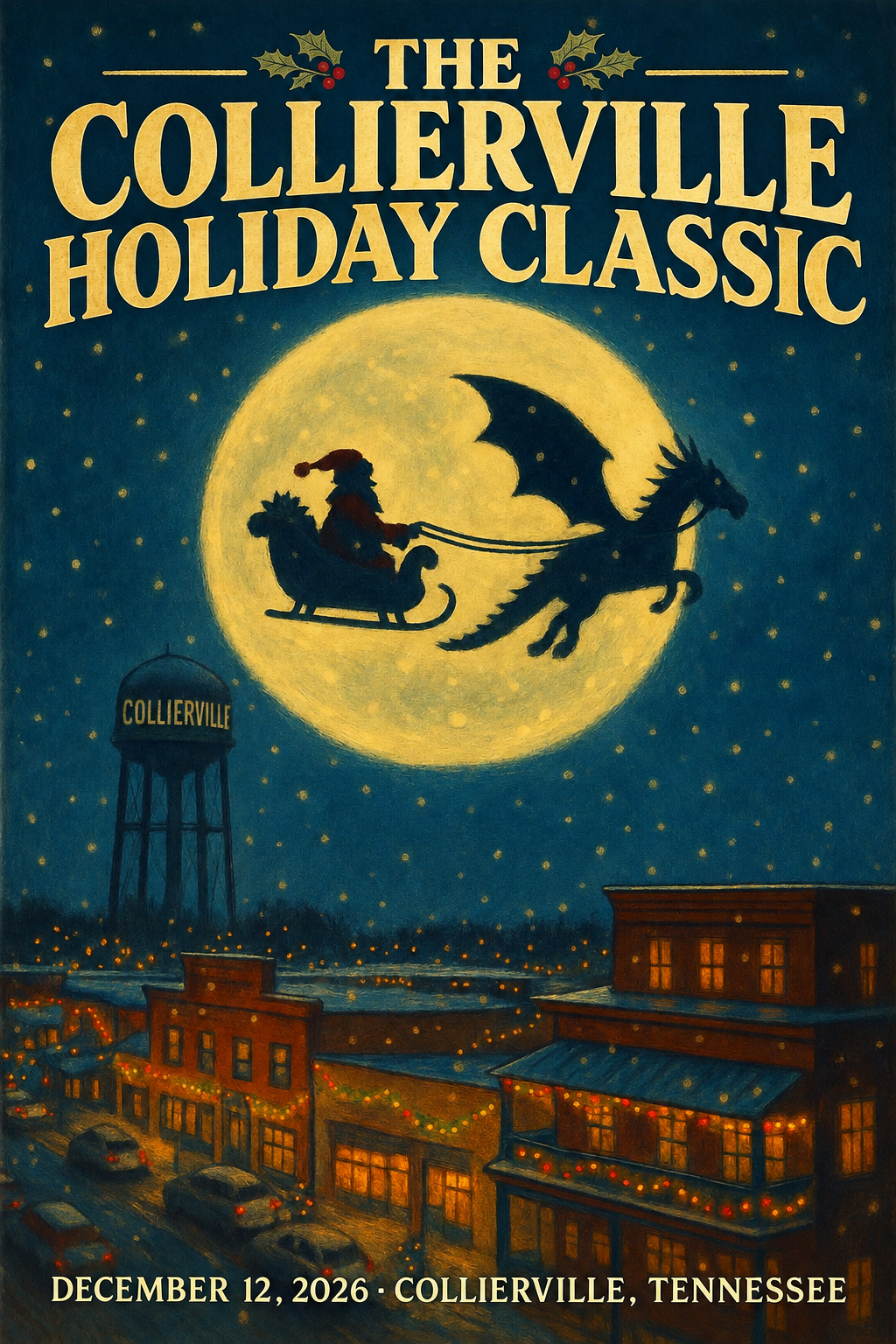
Collierville Holiday Classic
2026 — Collierville, TN/US
Middle School Storytelling
Event Description:
Storytelling
Judging Rules and Guidelines
Storytelling is one of the oldest performing art forms and contestants should consider the vast
heritage of this art. The purpose of this event is to give the student an opportunity to assume the
role of a storyteller and thus recreate for the listener the delights of an interesting story. As part of
this interpretation, the student should indicate an understanding of the atmosphere and/or culture
from which the story came.
a. Contest requirements
1. 2. 3. Stories may be from published, unpublished, retold or original
sources. If they are from any source other than the contestant, credit
should be given to the source in the introduction. Subject matter may
be humorous or serious in nature.
The story may be told in the contestant’s own words without the use
of notes. The contestant may use his/her own personal storytelling
style or adopt another appropriate style.
The contestant may use characterization and gestures while
telling the story, but the emphasis is on the storyteller and his/her
art. Movement is allowed. Hand props and costumes are not
allowed. The contestant may stand or be seated.
4. Time
(a) The maximum time limit is eight (8) minutes with a 30 second “grace”
(b) (c) period.
Any introduction given by the contestant shall be
considered part of the overall time limit.
Penalties shall be imposed for exceeding the time limit.
b. Judging criteria
Storytelling shall be judged on the choice of the story, the style of storyteller
(which includes both oral and physical skills that enable the contestant to
recreate the story in the mind of the audience), and on the ability to “tell”
rather than “recite” the story.
Locations
Collierville High School Shelby DrContacts
Jeffrey D RobbinsGeneral
Invitation Home Email Archive Events & Divisions Institutions In AttendanceEvents
Congressional Debate House Congressional Debate Senate Middle School Public Forum Debate Public Forum Debate Dramatic Interpretation Duo Interpretation Extemporaneous Speaking Humorous Interpretation Impromptu Speaking Improvisational Duet Acting Informative Speaking Middle School Dramatic Interpretation Middle School Duo Interpretation Middle School Extemporaneous Speaking Middle School Humorous Interpretation Middle School Impromptu Middle School Improvisational Duet Acting Middle School Informative Speaking Middle School Original Oratory Middle School Poetry Interpretation Middle School Prose Interpretation Middle School Storytelling Middle School TV Broadcasting Original Oratory Poetry Interpretation Program Oral Interpretation Prose Interpretation Storytelling TV BroadcastingCircuits
AR – Arkansas BAMA – Alabama KY – Kentucky NatCir – National Circuit (US HS) TN – TennesseeDates & Deadlines
CDTThese deadlines are set in Tabroom for technical purposes. Always consult the invitation or tournament notices for official policies about deadlines and procedures.